


Parametric Insurance for Typhoons and Flood Disruption: A Hong Kong SME Guide When Traditional Business Insurance Won’t Respond

Connect with us


Further Reading



In the modern world it would be foolish to treat weather risks as an occasional inconvenience.
Hong Kong is a perfect example of this.
Typhoons, Black and Red rainstorms, landslides and subsidence, flash floods, and transport disruptions can all interrupt revenue and business operations even when a company has not directly experienced any physical damage or loss.
This is where Parametric Insurance solutions come into play.
Unlike traditional insurance products which identify a risk and agree to compensate you accordingly following a loss, parametric insurance policies are designed to respond to a trigger; as long as the trigger is reached, even if there was no direct loss involved, then the insurance will pay a claim according to a predetermined schedule.
It is a different way to think about insurance, and isn’t going to be suitable for every company, but Parametric Insurance coverage has the potential to ensure your organization is protected against the widest range of risks possible.

Hong Kong SMEs Need a Weather Risk Conversation
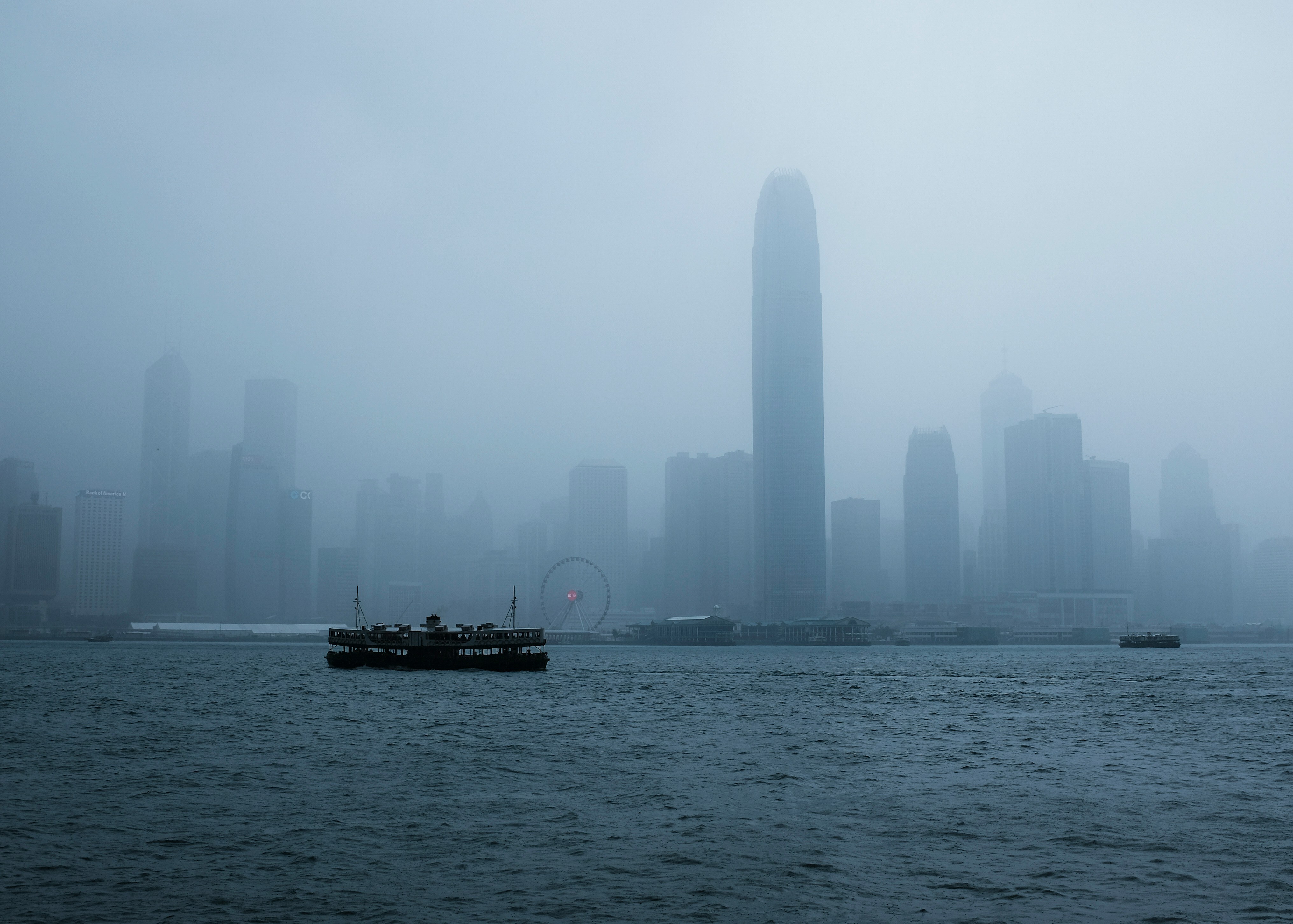
Few cities in the world understand preparing for adverse weather quite like Hong Kong. When a typhoon or rainstorm warning is raised, window and storm shutters are rolled down, outdoor stock is moved to a safe location, staff are sent home, and operations pause until the storm blows over.
These disruptions caused by weather can have very real consequences. A business could lose a full day’s trading (and revenue) because customers were sheltering from the elements and staff were at home. An exporter may miss critical outbound delivery windows because ports and logistics providers are shut down. Restaurants could be forced to throw away perishable stock when customers are unable to get to their location due to flooding. An agency hosting an event is forced to cancel its function when the venue closes.
None of these losses are unusual in relation to weather, but not all of them fit neatly into the coverage offered by traditional business or property insurance products.
This is concerning, especially considering the wider emerging weather risks that are consistently impacting HKSAR. In 2025 the Hong Kong Observatory recorded a record breaking 5 Black Rainstorm Warnings in a 17 day period spanning July 29 to August 14, with a total daily rainfall on August 5 2025 of 368.9 millimeters – the highest daily august rainfall total recorded by the observatory since records began in 1884. Further to this, 11 tropical storms impacted HKSAR in 2025; including Typhoon Ragasa from September 18 – 25.
Across Asia, the number of impactful weather events is growing year-on-year, but a protection gap exists that is wider than any single storm season. According to the OECD, natural disasters and weather hazards in emerging and developing Asia-Pacific economies caused average losses in the region of USD 48.4 billion between 2000 and 2023. These losses were driven, on the most part, by floods, typhoons/cyclones/hurricanes, and earthquakes. The OECD also highlights the fact that uninsured losses can slow overall economic recovery following a weather event, prolonging the disruption, and place significant pressure on business and public finances.

Traditional Business Interruption and Coverage Gaps
While traditional business interruption insurance is a valuable tool in a robust corporate insurance portfolio, many companies and organizations misunderstand how it will respond to their loss. In a majority of cases, Business Interruption Insurance is designed to insure against physical damage at an insured property, caused by a covered peril, that completely prevents access to a business, subject to the normal terms, conditions, and limits of the specific policy in question.
This can be fine for a situation when a typhoon physically damages a shopfront, a downed tree destroys the access point to a building, or a lightning-caused fire makes your office unusable. It does mean that business interruption insurance becomes less straightforward when the company itself is intact but customers, suppliers, or employees cannot operate in their typical manner.
Many businesses only discover a gap in their insurance coverage after a severe weather event; revenue may drop sharply due to a typhoon, but without any qualifying property damage there is no claimable event.
Deliveries may be delayed, but the delay could have occurred at the supplier’s site, or a port in another country, completely beyond your control and outside the scope of your existing Marine Cargo insurance protection. A store in a normally busy retail district may be quiet because the city is experiencing a direct hit from a typhoon, but the shop might not be “damaged” in the manner required by an Office and Shop Contents insurance policy. These weather-related situations create real stress and cashflow concerns for companies, but traditional wordings on classical business interruption insurance products generally don’t treat them as covered losses.
What is Parametric Insurance and How Does it Work?
Parametric insurance protection is designed around measurable triggers, rather than post-loss adjustment of actual damage.
This type of insurance is relatively new, and is designed to be inherently flexible. For example, a coverage trigger could be the hourly sustained gusts recorded at a specific weather station, rainfall accumulation in a specified area over a defined timeframe, typhoon signal duration, storm proximity, river level, or some other objective weather index. The policy sets out the trigger, defines the measurement source and covered location (or area), and the payment schedule before the weather event happens.
Let’s take a rain related parametric insurance policy.
This coverage might offer one payment if rainfall exceeds a specified threshold over a defined period, a higher payment if the rainfall exceeds a more severe threshold, and a maximum payment if the rain event breaks historical records. If we’re looking at a parametric insurance policy covering a Typhoon, then the payment to the policyholder could be linked to wind speed, storm track proximity, official signal duration, or even a combination of all these factors.
The key, when it comes to Parametric Insurance, and the policy’s payout, is that the insured event is objectively measurable.
This is the core difference of this type of coverage. Parametric Insurance does not require physical damage to have happened before paying a claim; the claim is paid according to a predetermined and agreed formula. Did X happen in Y location to Z extent? If the answer is “yes” then the policyholder will receive a claim settlement.
This is not to say that Parametric Insurance is better than traditional insurance, but rather that this is a type of protection which is designed to offer different, supplemental, coverage in different scenarios. Traditional Insurance products are always going to be the best way to go about indemnifying physical damage and insured losses after a detailed assessment of a qualifying event. But Parametric Insurance can better be seen as fast, predefined liquidity should a risk ever be realized.
For businesses, this means funds that can be used to protect payroll, devalued stock, pay rent, or simply keep the business moving while the situation returns to normal.

Parametric Insurance Building Blocks: Trigger, Schedule, Basis Risk
All Parametric Insurance products can be understood through three core components; the trigger, the policy payment schedule, and the basis risk.
Simply put, the trigger is the thing that turns the policy “on.”
The trigger under a parametric insurance policy must be clear, independently measurable, and relevant to the business exposure or activities. A vague trigger creates disputes and confusion. A weak trigger creates a false sense of security. A well-designed trigger will reflect the weather conditions that actually disrupt a business’ operations.
The payment schedule is the financial aspect of the policy; what gets paid, how much, and when. A simple structure could be HKD 250,000 when rainfall exceeds 150 millimeters per hour, HKD 500,000 when it exceeds 200 millimeters per hour, and HKD 1,000,000 if the rain was an extreme event exceeding 300 millimeters per hour. A more sophisticated payment schedule might vary payouts by location, season, duration or disruption, or even the business segment being impacted. This is to say, the schedule of a parametric insurance policy should be built around the needs of a business, and not guess work.
Basis Risk is the final component of a parametric insurance policy and is basically the trade-off being made. Under the basis risk, any payout being received may not exactly match the actual loss (if any) being experienced. For example, a company may receive a payment even though its real loss was much lower than expected, or it could suffer a physical loss and not receive any settlement simply because the trigger was not met.
It is important to realize that this is not a flaw hidden in the fine print of a parametric insurance policy, it is the central design concern for this type of coverage.
The basis risk of parametric insurance products can be reduced with careful trigger selection, strong data sources, good location mapping, and a payout structure that accurately matches a company’s cash flow exposure to weather events.

Parametric Weather Insurance and Your Business
The use for parametric insurance becomes evident where a loss is real, but difficult to prove under a more traditional form of business insurance protection.
Retail shock during, and following, a severe weather event is a great example of this. A shop in Times Square in Causeway Bay, or in the Landmark in Central may not be physically damaged during a typhoon or black rainstorm warning, but sales can collapse as customers stay at home, the MTR is shut down, buses are suspended, or tourists cancel their vacation plans. A parametric insurance policy built around typhoon exposure can provide cash when the weather event reaches the defined severity trigger, without the retailer needing to prove lost sales or damage.
Hospitality as well as Food and Beverage business face a similar problem. Restaurants losing lunch and dinner service during a black rainstorm warning, but which do not experience physical damage may find it very hard to get any compensation under traditional business insurance products. Classic property insurance protection will only respond to issues like food spoilage only if the wording permits; normally because the property is inaccessible or uninhabitable. Parametric coverage can provide immediate support as soon as the trigger is hit, giving a restaurant valuable support for the supply of fish they have had to throw away due to the lack of customers.
At this point it should be stated that Parametric insurance products are not a replacement for traditional business and property coverage. You are still going to need your required Employees’ Compensation Insurance policy, which is not something that will be replaced by a parametric option anytime soon. However, parametric insurance products are an alternative route to liquidity and cash flow for scenarios that may not trigger traditional claims quickly, or even at all.
In essence, Parametric Weather Insurance could be thought of as a Business Interruption supplement, complimenting existing forms of protection; classical insurance policies for insured damage, and parametric plans for weather-triggered cashflow shock. It is important to understand the roles that each type of insurance will play, mainly due to the simple fact that many small and medium sized businesses will buy insurance as a compliance, landlord, or even banking requirement. This often leads to the faulty assumption that “business interruption” means any interruption.
An assumption that can often be extremely costly.

Considering Parametric Insurance for Your Business
When looking at the purchase of a parametric insurance product, businesses should ask practical questions.
What exact events trigger payment? Who Measures the trigger? How quickly is data confirmed? How does the parametric layer interact with existing property and BI insurance? What basis risk remains? What would have happened under the proposed trigger during past major weather events?
SMEs should also ask how the limit was chosen. If the answer is simply “budget,” the structure may be weak. A better answer links the limit to cashflow runway, essential expenses, recovery costs, and realistic revenue impact. A parametric policy should not be bought because it is new. It should be bought because it solves a clearly identified liquidity problem.
For more information, Ask CCW.
Where your insurance is always Swift, Simple, and Sorted.